Showing posts with label book reviews. Show all posts

Friday, October 18, 2013

Perfect Halloween Reading

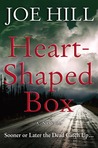
Heart-Shaped BoxHeart-Shaped Box by Joe Hill
My rating: 4 of 5 stars

I simply could not put this book down. I just kept wanting to read one more page, then one more, then one more. . . Then when I would finally put the book down in the wee hours of the morning, I would lay awake, staring into the darkness, wondering, "Did I just see something?"

Joe Hill's "Heart-Shaped Box" is a terrific ghost story, with the usual Joe Hill themes: music, cars, roads, broken families, and characters trying to be better. Pick this book up, you won't be disappointed.

View all my reviews

Friday, October 11, 2013

Living Simply and Intentionally

Made from Scratch: Discovering the Pleasures of a Handmade LifeMade from Scratch: Discovering the Pleasures of a Handmade Life by Jenna Woginrich
My rating: 3 of 5 stars

“Made from Scratch” is a charming memoir of the author’s journey toward self-sufficiency. Jenna Woginrich reminds me a lot of myself. She is constantly trying to learn new skills and pick up new hobbies. Though I have no interest in sled dogs or sheep keeping, I found that her book had some wonderful stories full of warmth and discovery, and some excellent project suggestions and references.

This is a great primer for those who are just starting to think about getting some country skills. It is a fun and inspirational read, and it offers a lot of resources for people looking to get started. From baking your own bread or playing your own music, to raising fiber animals and back yard chickens, “Made from Scratch” has it covered. You will learn both from Woginrich’s victories and from her mistakes. Even if you don’t ever plan to do most of what is discussed in the book, the writing is so engaging that it is a pleasure to read.

I enjoyed this book and plan to pick up Woginrich’s other book, “Barnheart” as well.


View all my reviews

Tuesday, October 8, 2013

On Inequality and Hope

Behind the Beautiful Forevers: Life, Death, and Hope in a Mumbai UndercityBehind the Beautiful Forevers: Life, Death, and Hope in a Mumbai Undercity by Katherine Boo
My rating: 4 of 5 stars

Katherine Boo’s non-fiction work, “Behind the Beautiful Forevers: Life, Death, and Hope in a Mumbai Undercity” is a gripping expose of life in one of India’s poorest slums. Annawadi is a slum that grew beside the expansive Mumbai International Airport complex. Boo’s story follows the lives of several Annawadi families as they churn through their own dramas and through the shockingly sad case of The One Leg.

“Behind the Beautiful Forevers” reads like a well-paced novel. Reminding myself that this isn’t just a story, that this is a true account of these real people’s lives, made the tale all the more horrifying and heart wrenching. Boo writes the characters beautifully and honestly. You feel like you really know these people who live in unimaginable squalor. Despite their social status, experiences, living conditions and work, most of them maintain an admirable hopefulness about the future. They struggle every day to bring themselves a speck closer to their goals.

I highly recommend this book. I couldn’t put it down, and thoroughly enjoyed getting to know these amazing Indians. Though the story isn’t a happy one, it is vital to the understanding of global inequality. Annawadi is a perfect example of the same wealth and poverty disparities seen in major U.S. cities, and large cities around the world. These people live across a busy road from some of the wealthiest residents and tourists of Mumbai. They are constantly gazing at the City’s most successful, but the gaze is not returned. The residents of Annawadi need you to know them. Their invisibility in Mumbai is a large part of their plight. The more people know and care what happens to them, the more opportunity will be afforded them.

So pick up the book and get to know Abdul, Sunil, Asha, and so many others. And don’t skip the Author’s Note at the end. Her goals and interests are not irrelevant to the story.


View all my reviews

Saturday, August 24, 2013

Cooked: A Natural History of TransformationCooked: A Natural History of Transformation by Michael Pollan
My rating: 4 of 5 stars

I've read all of Michael Pollan’s previous books and have very much enjoyed them. I am a big foodie; I like to cook and experiment in the kitchen with fermentation, brewing, baking, etc. This book, “Cooked,” is right up my alley.

“Cooked” is divided into sections based on the four elements: fire, water, air and earth. In the Fire section, Pollan delves into the mysteries of real pit barbeque. He studies what makes barbeque delicious and how to do the perfect whole pig roast.

In the Water section he studies braises and “one pot” cooking. Pollan discusses the similarities between the world’s great cuisines and the universal basics of the “onion and garlic” recipe base. This section also gets into the science of what happens in a pot between the meat and cooking liquids.

The Air section was on baking. This section was the most interesting to me, because I am not an experienced baker. One of the shocking things revealed in this book is the genetic modification and selection of grains and the perils of flour processing. I had no idea that when I was buying “whole wheat” flour, it was nothing of the kind! This section actually changed my life. I have researched and discovered a great, organic, non-GMO, stone ground whole wheat flour mill. I now order this four by the 25 lb. bag and make loves of delicious whole wheat sour dough bread ever week.

The last section was on earth and discussed fermentation and brewing because these arts are 100% dependent on the microbes that inhabit the earth. I am what Pollan refers to as a “fermento”. I have taken classes on fermentation, studied Sandor Katz’s books, and always have something percolating on my kitchen counter. So, much of this section was old news to me, but definitely would be interesting and useful to someone interested in making their own lacto-fermented pickles or sauerkraut. He also experiments with making his own beer, but since I brew my own beer, cider and mead, this was really just an overview of things I already knew.

To conclude, “Cooked” was a very enjoyable romp through homemade food. Pollan writes personably and you feel as if you are on the odyssey with him. Even if you are pretty accomplished in the kitchen, this book is sure to open you up to a few new ideas and challenges. So get “Cooked” and get in the kitchen!


View all my reviews

Friday, August 23, 2013

The Untold Story of True American Heroines

The Astronaut Wives Club: A True StoryThe Astronaut Wives Club: A True Story by Lily Koppel
My rating: 4 of 5 stars

I really enjoyed this story about the Astronaut wives, though it did end up making me sad. These women were amazing. They were so focused and dedicated to supporting their husbands’ careers. Everything they did was with consideration to how it would affect their husbands. From the early years as the wives of military test pilots to the glory of the Apollo moon landing, these woman did everything in their power to help their men succeed.

Unfortunately, their service and devotion was not reciprocated. These heroes of American history lived the lives of rock stars, not family men. They blatantly kept “Cape Cookies” on the side, abandoned their families, and took all of the sacrifices of their wives completely for granted. Even knowing that NASA valued strong families, and that a healthy marriage was a strong indicator of astronaut success, it was left almost entirely up to the wives to keep up the façade. They had to pretend that they didn't know what their husbands were up to in Cape Canaveral. They had to be stoic and supportive to the bitter end.

With such a lifestyle, is it any wonder that the wives only had each other to commiserate with? Though there was a lot of competition between the couples for prime space missions, the wives became a close knit community unto their own. I was happy to hear that they still had regular get-togethers even today.

“The Astronaut Wives Club” is a wonderful overview of these true American heroines. Their story has largely gone unsung, but Lily Koppel has done a good job of introducing us to most of them. There were a lot of wives by the end of the Apollo missions, and it was sometimes difficult to keep them all straight in my mind. I think that I would like to read more in-depth memoirs on some of the women introduced in this book. They just had such interesting personalities and lived through such unique circumstances, it is hard to believe that this is the first book ever written about them.

I highly recommend this book to anyone interested in women’s history, the space race, or American history. It was a fascinating read that I think everyone would enjoy.


View all my reviews

Wednesday, August 14, 2013

Life After DeathLife After Death by Damien Echols
My rating: 4 of 5 stars

I have been following the story of the West Memphis Three since the beginning. I was a teenager during the mid-90s Satanism scare, and I remember clearly when Damien Echols became the wide-eyed face that symbolized it. He looked like my friends and I never could believe he was guilty.

After watching the Paradise Lost trilogy on HBO I was certain he wasn't guilty and couldn't believe that he remained on death row for a crime he didn't commit. Now that I have read his memoir, “Life After Death” I am in awe of the railroading of his case.

I didn't have high expectations for a memoir written by an (unwilling) high school drop-out, but Echols totally delivered. His writing is lyrical, honest and very evocative. He describes the grinding poverty in which he grew up in such stark detail that I felt like I was experiencing it myself.

As his story comes closer and closer to his arrest it becomes clear that Echols was a victim of zealous, perhaps even mentally disturbed police and a corrupt court system. He was harassed for years by the police, incarcerated and even placed in a mental institution with little to no grounds. His arrest on the Robin Hood Hill murders seemed almost inevitable – like the police had been cultivating him as a suspect. And his family were so ignorant and complacent, that they did nothing to defend him or protect him from the harassment.

His journals from his years in prison are heartbreaking. Echols leans heavily on spirituality, mysticism and meditation. Given no other option, he retreats deep into his own psyche. Much of his journal entries are filled with his struggle to attain deeper and deeper meditative states.

The other major theme from his prison journals was about his wife, Lorri. Echols is deeply in love with her, and keeping their relationship healthy was a great focus of life while he was incarcerated. He praises her for all of her tireless work on his case, and credits her for giving him a reason to keep on living while he was hopeless on death row.

“Life After Death” is a terrific memoir. It leads the reader through the perils of poverty in the Deep South, teenage angst, the terrors and helplessness of the justice system, and the absolute gray numbness of prison. If you are looking for an incredible story, Echols has one that is an absolute page-turner.


View all my reviews

Tuesday, May 21, 2013

Twinkies Are Oil! Oil!

Twinkie, Deconstructed: My Journey to Discover How the Ingredients Found in Processed Foods Are Grown, Mined (Yes, Mined), and Manipulated Into What America EatsTwinkie, Deconstructed: My Journey to Discover How the Ingredients Found in Processed Foods Are Grown, Mined (Yes, Mined), and Manipulated Into What America Eats by Steve Ettlinger
My rating: 3 of 5 stars

“Twinkie, Deconstructed” is a book with one, horrifying central theme: all the ingredients in a Twinkie have a single source – petroleum. The book became painfully repetitive as it described how once again, the ingredient was made from fossil fuels. Over and over again this book describes processes of heat and extraction that result in the production of the chemically-laden “food” that makes a Twinkie.

I had expected the ingredients in Twinkies to be a chemical horror, but what really brings this book home is how Ettlinger breaks down the ingredients and shows the reader how some of these ingredients are used in the home. Ever use baking powder or bleached all-purpose flour? Then you too have a cupboard full of highly processed foods. The process for imitation vanilla is amazing.

Though I have not had a Twinkie in thirty years, this book made me think about all of the other foods that I eat that have similar ingredient lists. These petroleum-based ingredients can be found in practically any processed food you might encounter – everything from pasta sauces to lunch meats.

I gave this book thee stars because I did find the format repetitive, though that is not entirely the fault of the author. And the repetition did serve to drive home what is really in our food. I also had just finished the book “Salt, Sugar, Fat” which does a better job of writing about a similar thing. I felt that Ettlinger did not press his sources enough regarding the health and safety of the ingredients he was researching. That being said, “Twinkie, Deconstructed” was a real eye-opener. If you are interested in the chemistry of food, or food origins, this will be a great read for you.


View all my reviews

Thursday, May 2, 2013

Sex and Science Made Hilarious

Bonk: The Curious Coupling of Science and SexBonk: The Curious Coupling of Science and Sex by Mary Roach
My rating: 4 of 5 stars

Is there any subject that Mary Roach can't make fascinating and humorous? I don't want to write any spoilers about the book, but I will say that she deftly examines the work of Kinsey, Masters and Johnsons, and numerous other current day sex researchers and physicians. If you ever wondered about pheromones, libido, attraction, physiological aspects of sex, sexual dysfunctions or sexual norms throughout the ages, then this book is for you. Roach’s footnotes alone are worth the cover price. Well researched, insightful, and very very funny. I highly recommend it.

View all my reviews

Tuesday, April 30, 2013

The Problems with Processed Foods

Salt Sugar Fat: How the Food Giants Hooked UsSalt Sugar Fat: How the Food Giants Hooked Us by Michael Moss
My rating: 4 of 5 stars

“Salt Sugar Fat” has ruined grocery shopping for me. I’ve never been a fan of highly processed foods. I am not one to throw Kraft Cheesy Skillets, or Lunchables into my grocery cart. I know that processed foods are bad for you and full of empty calories. But this book took that point of view and radically expanded it.

So much of what we think of as “food” contains little to no actual food! And it is a worse problem than just obesity. These “foods” contribute to high blood pressure, organ failure, heart failure, altered taste buds, and even cancer! Manufacturers of these products know their dangers and don’t eat them. I wouldn’t eat a meal at a fancy restaurant that the chef wouldn’t touch, so why would I eat a meal in a box that the CEO of Kraft wouldn’t touch?

“Salt Sugar Fat” is broken up into three sections that address each ingredient’s role in processed foods. First is Sugar, and this section is a real eye opener. We all know about the sugars involved in sodas, but what was really frightening to me was the secret sugars that are added into all manner of foods in order to mask other chemical “off” flavors. This is the section that first introduces the concept of the “Bliss Point”. According to Moss’ research, people’s bliss points for sugar are higher and higher due to early exposure to high sugar foods in infancy. If you grew up drinking soda and other sweet drinks, you are doomed to crave higher and higher sugar contents in your foods for the rest of your life.

The Salt section has similar information to the sugar section. People are developing higher and higher tolerances to salts in their foods. Even children, who normally don’t like a lot of salt, are being trained by processed foods to crave it. Again, salt is added to EVERYTHING. It provides better mouth feel for a lot of products, preserves products, and masks metallic and other off flavors.

I was ready to be hit hard by the fat section, and I was not let down. Fats are not going away from processed foods. Fat is essential to their success. Moss’ research shows that when salt and sugar are combined with fats, our brains/bodies do not identify how much fat we are ingesting. Basically, the key components of processed foods work together to turn off our natural satiety. That’s terrible news for the consumer, but great news for processed food manufacturers.

Don’t read this book if you aren’t prepared to go to the grocery store armed with your new found information on processed food. You will be checking the labels on everything and evaluating and translating the information therein. Nothing is as it first appears. “Low Fat” or “Diet” varieties often harbor secret stashes of extra salt or sugar that keep the calories ridiculously high. But if you are ready for some hard truths that might just save your life, get this book today.


View all my reviews

Wednesday, March 27, 2013

Kingsolver Gives Us Wings


Flight BehaviorFlight Behavior by Barbara Kingsolver
My rating: 5 of 5 stars

I charged through this book. It was strange, because I wouldn't say it was action packed, but the characters were so engaging and the plight of the butterflies so tenuous that I couldn't put it down. Kingsolver rarely fails me, and this is another triumph. Wonderful read, you should get it here:


View all my reviews

Wednesday, August 5, 2009

Phantoms in the Brain

I just picked up, Phantoms in the Brain, by V.S. Ramachandran. Dr. Ramachandran is Director of the Center for Brain and Cognition and Professor with the Psychology Department and Neurosciences Program at the University of California, San Diego, and Adjunct Professor of Biology at the Salk Institute. He is best known for his study of visual perception and behavioral neurology. Phantoms in the Brain delves into both of these areas as Ramachandran explores the mysteries of the mind.

What I have found most amazing about this book so far is the fact that the adult brain is so malleable. Damage may be reversed, or at least compensated for by other areas. Neural pathways are not set in stone. Scientists are just beginning to understand how our brains perceive ourselves and our environment, and this understanding will open doors only previously imagined. With further understanding, doctors may one day be able to treat stroke patients by building new neural pathways that will allow sectors of the brain to take up the cues and commands of the damaged portions.

Furthermore, Dr. Ramachandran has discovered that visual cues play a significant role in our perceptions. Sight can dictate our perceptions ourselves as well as the outside world. He found that amputees' experiences of phantom limbs had a direct correlation to their sight-induced body image. If the limbs were paralyzed before amputation, he found that many of the patients experienced paralyzed phantoms, and that this was caused and (in about 50% of cases) could be cured by visual cues.

As a reader with little scientific training, I found this book both fascinating and easy to understand. Dr. Ramachandran writes for a lay audience as opposed to neurologists. The book also contains numerous images and diagrams to aid in understanding, as well as very detailed end-notes and bibliography. Science may be generations away from explaining the inner workings of the mind and perception, but Phantoms in the Brain is an important stop along that road.

Wednesday, July 30, 2008

Book Review: When You Are Englufed In Flames

I have been a dedicated David Sedaris fan ever since I first discovered his book, Naked. Sedaris writes so candidly about his life and inner monologue that the reader feels like s/he knows the writer intimately. He lays himself bare with only a glamour of dry wit to cover the truth.

The vingettes in When You Are Engulfed In Flames discuss Sedaris' insecurities and discomforts, his relationship with his long-time boyfriend, Hugh, his travels, and his quest to quit smoking in Japan. Wry and always slightly self-conscious, Sedaris will make you smile and cry all in the same story. I always feel his books end too quickly, and this one was no different, but as I closed its cover, I felt deeply satisfied. "When You Are Engulfed In Flames," is an entertaining and self-reflecting read. Well-balanced and thoughtful, it's words will remain with you long after you have finished reading the last page.

Thursday, March 27, 2008

Ken Follett

Over the last month I have been devoting myself to Ken Follett's major works, Pillars of the Earth and World Without End. I finished Pillars of the Earth last week and immediately began World Without End because I was so captured with the story.

When I began Pillars of the Earth I didn't know anything about the story except what was written on the back cover. It sounded engaging, and I liked the prospect of a large work of fiction being set in Medieval England. There is a lot that can be learned from this book about architecture, Medieval building practises, and Medieval culture. As it is a book written primarily about the building of a large catholic cathedral, I was expecting to learn a lot about the early church, church customs and law, and the like. However, I was not expecting the high level of violence, raping, and pillaging that is involved. A sedate read, Pillars of the Earth, is not. Parts of this book were actually hard for me to read as a woman. Even though, intellectually, I know that woman had a rough deal throughout history, it is shocking what happens to the women in this story. You feel close to them, and it is hard to read about the trials they endure

The story itself is extremely well-written, suspenseful, informative, and gripping. The characters are complex and there is a lot of mystery and motivation involved in the plot. Though the length of this tome may be daunting to some, it is such a complex story and so entertaining, that the pages turn at a rapid pace. I feel I finished it far too quickly, which is why I immediately plunged into World Without End.

I am only about 150 pages into this book, but I have to say that I feel that it is a bit formulaic. It seems to be progressing with a very similar plot and very similar characters. It isn't that it is any less good than Pillars of the Earth, but having just finished it, it is fresh in my mind and I am constantly noticing the similarities between the two. Still, it is an excellent source of English history, the characters are compelling, and the story is full of violence, struggle, and intrigue. I'll have a more complete analysis when I have finished it.

Until then . . .
Tuesday, June 12, 2007

Book Review--"A Suitable Boy"

I just finished a fantastic novel, by Vikram Seth, entitled, "A Suitable Boy." This book is not for the light reader; it is nearly 2,000 pages and involves a lot of detailed politics of the newly democratic India. However, for those who enjoy learning new things from their novels, or love novels that take the time to fully develop a whole cast of characters, this book will enchant.

"A Suitable Boy" is a generational story that takes place in India shortly after the death of Gandhi. It closely tracks the lives of several extended families who are joined together through love, honor, friendship, politics, history, and marriage. Vikram Seth delves into the minds of his heroines with an accurate intimacy and poignancy that is rare. His heroes have flaws and strengths, and before long, all of the characters in the novel begin to feel like members of your own family.

The main thread of the novel belongs to Lata Mehra. She is a college student whose mother has decided that it is time for her to marry. Her life touches the lives of nearly all of the other characters in the book. But the quest for a suitable boy for Lata is only one of the stories that unfolds. Another is the story of friendship between two families of diametrically opposing views, or the story of a young man's maturation, or the tales of love lost, of religious freedoms and tolerance, of the political evolution of one of the largest democratic countries in the world, and of every day life in India in the late 1950s.

I highly recommend reading this book. I felt lost and saddened when I came to the end of it, because I had gotten so used to spending time with the Mehras, Chattergis, and Kapoors every day, and suddenly, this relationship is at an end. So pick it up at your local book shop--you'll be glad you did. You can tell Lata and Mahn than I miss them.

Tuesday, May 22, 2007

Introductions

Welcome to my blog!

My name is Erin Wiedemer. I am a freelance writer and editor (check out my website here) who is always looking for new challenges and opportunities. I'm a blog neophyte, but I'm enjoying the learning experience.

This blog will be my creative outlet. I plan to post drafts of short fiction, information pieces on writing and editing, book reviews, and short bits on anything that motivates me. Hopefully, you will all offer me your opinions and constructive criticisms on my writing. I want this blog to be a place of entertainment and learning for all of us. I plan to post about once a week, so keep checking on me to see what's new.

Tootles for now :)
e.